
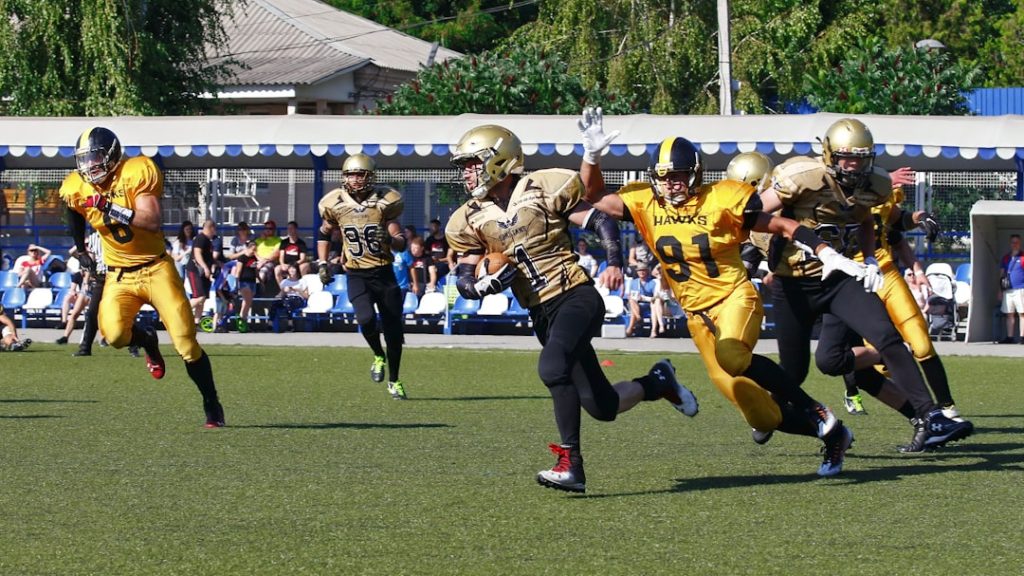
American football can look like chaos. Big players crash into each other. Quarterbacks throw deep bombs. Coaches shout into headsets. But behind the noise is a game of careful planning. Every play is a small battle. Every formation has a purpose. Once you understand the offensive and defensive tactics, the game becomes clear—and much more fun to watch.
TLDR: Football is a chess match played at high speed. The offense tries to move the ball and score using smart formations, clever play designs, and teamwork. The defense tries to stop them with pressure, coverage, and physical tackling. Understanding basic tactics like passing routes, running schemes, blitzes, and zone coverage makes the game easier and more exciting to follow.
Understanding the Goal of Each Side
Football has two main phases. Offense and defense.
- Offense: Moves the ball down the field to score.
- Defense: Stops the offense and tries to take the ball away.
The offense gets four chances, called downs, to move 10 yards. If they succeed, they get four more downs. If they fail, the ball goes to the other team.
Simple idea. Endless strategy.
Offensive Tactics Explained
The offense wants to score touchdowns or field goals. They do this through two main methods:
- Running plays
- Passing plays
But how they line up and execute these plays makes all the difference.
1. Offensive Formations
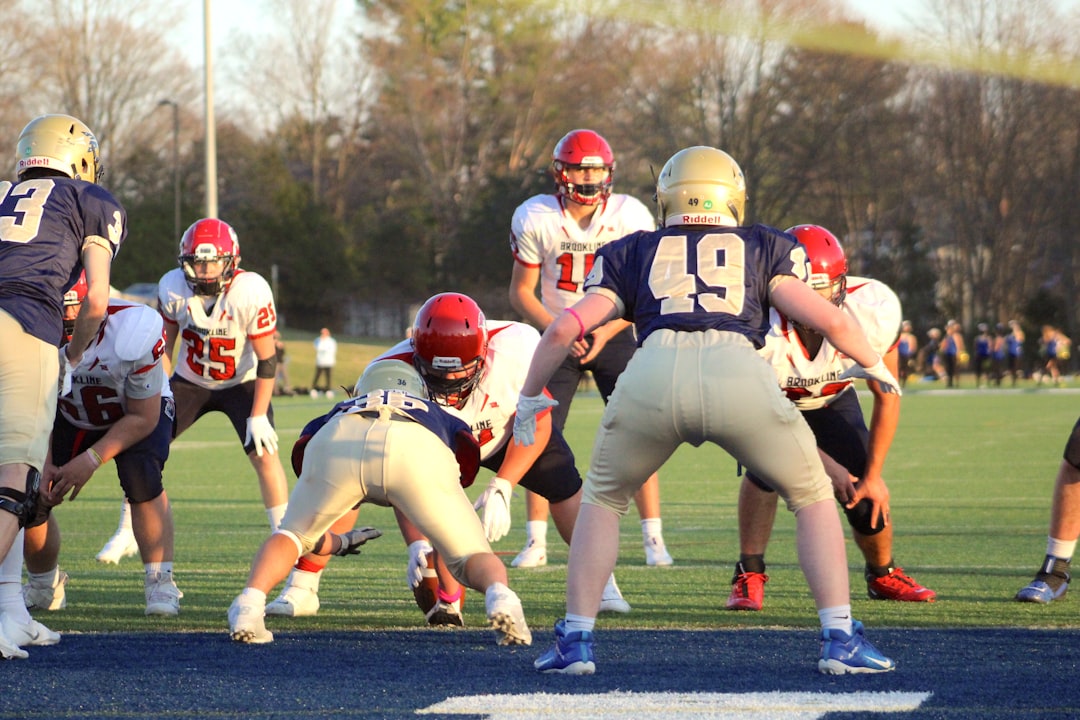
A formation is how players line up before the snap.
Common formations include:
- Shotgun: Quarterback stands several yards behind the center. Great for passing.
- I-Formation: Running back lines up directly behind the quarterback. Strong for running plays.
- Singleback: One running back. Balanced attack.
- Spread: Wide receivers spread across the field. Forces defense to cover more space.
Each formation sends a message. Sometimes that message is a trick.
2. Running Game Tactics
Running the ball is about power and timing.
Common running tactics:
- Inside Zone: Offensive line blocks areas, not specific defenders. The runner chooses an open lane.
- Outside Zone: Designed to stretch the defense toward the sideline.
- Power Run: A pulling lineman leads the runner through a gap.
- Draw Play: Looks like a pass at first. Then surprises the defense with a run.
The goal is simple. Push defenders out of the way. Create space. Explode through the gap.
3. Passing Game Tactics
Passing spreads the field. It creates big plays.
Passing plays depend on timing and route design.
Receivers run specific routes, such as:
- Slant: Quick diagonal toward the middle.
- Out Route: Sharp cut toward the sideline.
- Post: Angled toward the goalposts.
- Go Route: Straight sprint downfield.
- Curl: Run forward, then turn back to the quarterback.
Quarterbacks read the defense in seconds. They look for weaknesses. Then they strike.
4. Play Action and Misdirection
Smart offenses use deception.
Play action starts like a running play. The quarterback fakes the handoff. The defense steps forward. Then comes a pass over their heads.
Misdirection sends players one way while the ball goes another way.
Confusion creates opportunity.
5. No-Huddle and Tempo
Some teams move fast. Very fast.
No-huddle offense skips the team meeting between plays. It prevents the defense from substituting players. It tires them out. It creates chaos.
Fast tempo can win games.
Defensive Tactics Explained
The defense has one mission. Stop the offense.
They do this with structure, pressure, and discipline.
1. Defensive Formations
Defensive formations are based on how many linemen and linebackers line up near the ball.
Image not found in postmetaCommon formations:
- 4-3 Defense: Four linemen. Three linebackers. Balanced.
- 3-4 Defense: Three linemen. Four linebackers. Flexible and aggressive.
- Nickel Defense: Five defensive backs. Used against passing plays.
- Dime Defense: Six defensive backs. Focused heavily on pass coverage.
The numbers tell you who is near the line of scrimmage.
2. Run Defense
Stopping the run requires strength and positioning.
Key ideas include:
- Gap Control: Each defender guards a specific space between offensive linemen.
- Contain: Defensive ends prevent runners from getting outside.
- Stack and Shed: Linebackers engage blockers, then break free to tackle.
One missed gap can mean a big gain.
3. Pass Coverage
Defending the pass is about awareness and coordination.
There are two main types of coverage:
Man Coverage
Each defender guards a specific offensive player.
- Tight coverage.
- High pressure.
- Risky if a defender gets beaten.
Zone Coverage
Defenders guard areas, not players.
- Eyes on the quarterback.
- Better at preventing big plays.
- Soft spots can appear between zones.
Coaches mix both styles to confuse quarterbacks.
4. The Blitz
A blitz is when extra defenders rush the quarterback.
Normally, four defenders rush. In a blitz, five or more attack.
The goal:
- Force a quick throw.
- Create a sack.
- Cause a mistake.
But blitzing leaves fewer players in coverage. Big risk. Big reward.
5. Turnover Strategies
Great defenses do not just stop plays. They steal possessions.
They focus on:
- Ball Stripping: Punching at the football.
- Jumping Routes: Anticipating passes.
- Tip Drills: Catching deflected passes.
Turnovers change momentum instantly.
Offense vs Defense: The Chess Match
Football is about adjustment.
If the offense runs successfully, the defense adds more players near the line.
If the defense blitzes often, the offense throws quick passes.
Everything reacts to everything.
| Situation | Common Offensive Response | Common Defensive Response |
|---|---|---|
| Defense stacks box to stop run | Play action pass | Zone coverage |
| Defense blitzes heavily | Quick slants and screens | Disguised pressure |
| Offense spreads field | Short quick passes | Nickel or dime package |
| Offense runs no huddle | Fast tempo attack | Simplified coverage calls |
This constant adjustment makes every snap exciting.
Special Situations Matter
Tactics change depending on the moment.
Red Zone Offense
When the offense is close to the end zone, space shrinks.
- More running plays.
- Tighter passing windows.
- Taller receivers become valuable.
Two-Minute Drill
At the end of a half, time is short.
- Sideline passes stop the clock.
- No-huddle becomes critical.
- Defenses protect against deep passes.
Goal Line Defense
Defense packs the line tightly.
- Extra linemen.
- Maximum physicality.
- Minimal room to move.
Every yard becomes a battle.
Why Tactics Matter to Fans
Understanding tactics changes how you watch.
You start to see:
- Why a team runs on third and short.
- Why a safety shifts before the snap.
- Why a quarterback changes the play at the line.
You notice patterns. You predict plays. You appreciate coaching decisions.
The game slows down in your mind. Even if it stays fast on the field.
Final Thoughts
American football is not random. It is organized aggression. Structured strategy. Controlled chaos.
The offense builds plans to attack weaknesses. The defense builds counters to stop them. Each snap is a puzzle. Each drive tells a story.
Learn the formations. Notice the coverage. Watch the battle in the trenches.
Once you understand the tactics, football becomes more than hits and highlights. It becomes a strategic masterpiece played at full speed.